
Topic: To A.I. or not to A.I., that is the question!

To A.I. or not to A.I., that is the question! But what is A.I.?
Well, it defines itself as:
“Artificial Intelligence (A.I.) is computer technology built to think, learn, and solve problems like a human. Instead of just following strict, step-by-step instructions, A.I. learns by looking at thousands of examples, finding patterns, and making decisions on its own.” A.I. is embedded in much of our current technology. We often use A.I. without realizing it.”
In this overview of A.I., we want to take an objective look at the concerns, uses, and developmental appropriateness. We also want to explore how to balance its use effectively as well as how to ask questions of A.I.
Possible Concerns About Using A.I.
Easy to over rely on AI and not check the accuracy of the provided information
Privacy invasion, it allows others to access one’s information
Rabbit Holes, Wasting Time, Doom Scrolling
Possibility of it taking over
Environmental impact
Fear of change and unknown
Keeping your own ideas and not being invaded by formulas
Can hamper development of executive function and cognition, problem solving
Easy quick answers, can short circuit critical thinking and the creative process
Advantages of Using A.I.
Spell check
Grammar check
Research tool, starting place
Helps refine questions
Find information, resources
Generates initial possible information
Helps frame the question
Compares like products and/or ideas
Helps make an informed decision
Provides materials in various languages
Translation services
Can be a tool to support group work
Strategies for Integrating Technology Into the Program
As educators, when we think about using A.I., we may have at least four major considerations:
What do I plan to do with the information I gain?
How can I best frame the question(s)?
How might it work to involve the children if developmentally appropriate?
What areas of curriculum might be further developed as children work to plan, research, and create questions for A.I.?
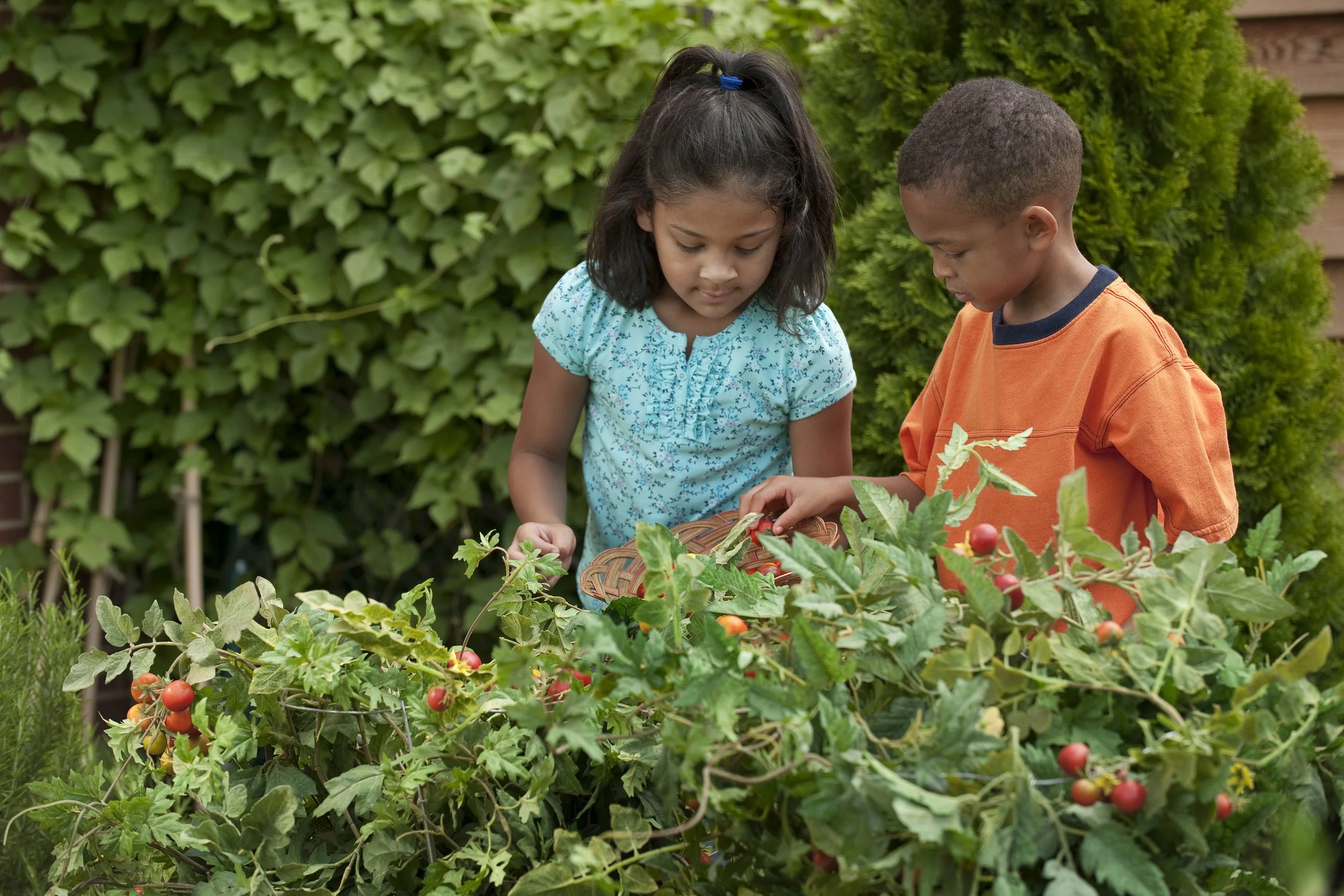
Let’s use an example of planting a class garden.
Before any use of the internet, a group discussion for planning the garden, facilitated by the adult, might include questions such as:
What plants shall we grow?
Where shall we put the garden?
What do we need to do to grow the garden?
What else do we need to know?
Once these specific ideas are presented, it becomes easier to frame the questions to ask A.I. Starting with a statement describing the project, being as specific as possible, then the question(s) can be asked. For example, asking A.I.:
We hope to grow flowers, carrots, and tomatoes in our school garden. The garden will be at:
Elevation: (2,200 feet)
Climate: (Summer: cool evenings; hot days)
Soil: (sandy and clay)
Sun and shade: (shade in the mornings; sun in the afternoons)
Question: What plants will we be able to successfully grow in this setting, and how can we best care for them?
If the group is younger (ages 3, 4, 5), the adult can use this model and frame the questions from the group discussion with the children. Upon getting answers, they can be shared and discussed with the children.
If the children are older, then it may be possible for the adult to work with them to actually do some of the research that leads to framing the questions in specific ways. They can help figure out the elevation, describe climate, soil, and sun and shade. These are all good science observation skills that can be promoted. In addition, learning how to ask questions is another good science skill, as well as generally important.
Once the answers to the questions are supplied, then it is time again for group work to plan the implementation. The A.I. answers can be presented, discussed, and ideas for how to plant and take care of the garden can be shared by all. Using chart paper, ideas can be written for all to see and remember.
When using A.I., it could be tempting to simply put it to work to answer questions. Instead, consider how the children can be involved in group discussions, in creating questions, in the research to make questions specific, and in developing plans for implementation of the project.
NOTE: We chose “Dear Olive Branch” as the title for this column for several reasons – foremost as a sign of peace. Also, olives come in many colors, sizes, tastes, uses – a sign of diversity just as there are many types of questions and those who send the questions. We hope Olive’s responses will help you, the reader – if you have a question for Olive, send it to our email address. When Olive isn’t available to answer questions, members of EPCC and/or P.E.A.C.E. will step up to help.
Olive’s Future Columns
We are looking for your questions and/or short stories to be considered for inclusion in the future. Word range: 150-300 words.
This article is part of our Newsletter 2026 Issue 4. See all articles.
Share article